

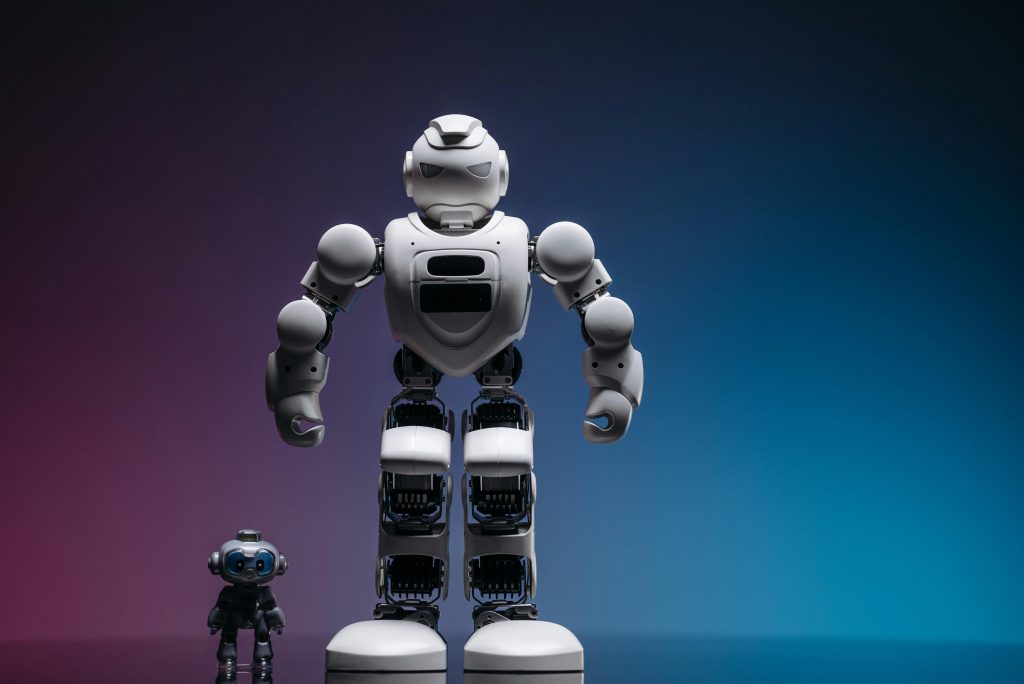
In 2025 AI is no longer a futuristic concept – it’s a business imperative for small businesses. As more entrepreneurs compete in a digital, data driven market AI is changing small business operations in big ways: automating tasks, enhancing customer engagement, making better decisions and even redefining business models. This article looks at how AI is changing small business operations, what the opportunities are and what small business owners need to be aware of as they adopt AI solutions
1. From Manual Labor to Intelligent
One of the most tangible ways AI is changing small business operations is through intelligent process automation. According to a recent report, AI capabilities such as workflow automation, predictive analytics, natural language processing and even computer vision are now available to small and medium enterprises (SMEs).astrum.software+2nyongesasande.com+2Here are some examples:• Onboarding a new customer: AI can handle the data capture process, route the data, follow-up emails and even sentiment tracking.• Back-office finance: AI tools can automatically categorize expenses, reconcile bank statements, automate reminders for invoices and create real-time cash-flow forecasting reports. saifa.ai+1• Inventory and operations: AI and computer vision can enable automatic scanning of a physical inventory stock, predictive maintenance alerts and identify operational bottlenecks. astrum.softwareFor small businesses with limited staffing, finite resources, this is a business imperative: they have shifted away from spending hours on administrative tasks to spending that effort to drive growth, strategy and customer experience.
2. Improving Customer Engagement and Service
Small businesses are increasingly taking advantage of AI-powered customer engagement tools—chatbots, virtual assistants, recommendation engines and personalized marketing—to offer enterprise-class service at a fraction of the cost.For example, AI chatbots can:• Respond to FAQs about the business, order tracking, and basic support 24/7. nyongesasande.com+1• Segment customers by behavior and tailor marketing messages and offers in real-time. nyongesasande.com+1• Monitor sentiment and identify issues before a escalation of an issue, and direct sophisticated customers to human support staff.Through embedding this capability in how small businesses operate, they give customers and clients a “big-brand” experience while remaining agile and supporting their low-cost structure.
3. Data-Driven Decision Making
AI can provide small businesses with transformational value by converting data into actionable insights. In 2025, the majority of SMEs are likely to be using predictive analytics and machine learning to forecast demand, improve pricing, identify customers at risk of churn and forecast cashflows. astrum.software+1Examples include:• A small retailer uses AI to forecast which SKUs are likely to sell best in the upcoming season (and optimise their inventory investment).• A service business uses AI to analyse customers who have not purchased again and launch an AI driven win back campaign.• Businesses are also able to use dashboards and reports that AI generates to help make better, faster decisions – instead of gut feel or compiling spreadsheets manually to enable intelligent decisions.In summary: AI improves the operational maturity of small firms and enables them to behave like large competitors in terms of intelligence and intuitiveness.
4. Providing Scalability and Growth Potential
AI’s potential to automate low-value tasks and facilitate intelligent workflows has provided small businesses with greater opportunities to grow, innovate and scale their operations. Small businesses are now able to enter new markets, experiment with new product lines, and personalise customer experiences at scale. According to an SME digital transformation report, firms who implement AI and digital tools usually outperform their competitors when assessing productivity and competitiveness. cfib-fcei.ca+1Additionally, generative AI supports content development – marketing copywriting, design visualising, social media posts and, even simplistic coding have high potential to be generated with limited human manpower. astrum.softwareAs a result, small businesses can function beyond their stasis – focusing on strategy, creativity or customer development while AI executes the repetitive work.
5. Rethinking Business Models and Operations
In addition to formalizing workflows, AI is pushing small businesses to reconsider what it means to operate a business. Rather than working faster as an employee or owner, many are fundamentally restructuring their operations around AI-enabled workflows and business processes. For example:• Subscription-based models with AI-based analytics as a new value-add.• Service-based companies that will leverage AI to provide predictive maintenance, or alert to take proactive action. • Retailers providing hyper-personalised experiences informed by AI-based customer behaviour analytics.In this current moment, thinking operational excellence isn’t only about cutting costs—it’s about using AI to create differentiated value and change how businesses fundamentally operate with the customer experience.
6. The Obstacles and Factors
While the prospects of AI for small businesses are great, obstacles still exist. There are several challenges to consider in 2025:• Digital maturity and infrastructure: Many small businesses do not have even basic digital tools (cloud computing, data-management, collaboration tools). A report by the European Commission and European investment bank Reports of European SMEs noted that many SMEs adopted AI without consideration of their existing foundational infrastructure in digital. Reuters• Skills and change management: Leveraging AI successfully requires the right skills, including data literacy, prompt engineering and process design. arXiv+1• Ethics, Trust and Governance: Small businesses may neglect areas such as data privacy, algorithmic bias or transparency—yet those areas become increasingly important. A recent framework articulates trust and ethics for small businesses that use large‐language models. arXiv• Adoption Gap: More businesses are aware of AI, but fewer than half of small businesses integrated AI technologies into core business operations. LinkedIn+1• Return on Investment (ROI): Some companies adopt AI-enabled tools with no deep integration into their operational processes to extract value from AI-driven technology. Later stage research articles show only a small percentage of businesses extracted all value from AI. Business InsiderThe real task for small businesses then is not only to adopt AI, but to integrate it into processes, train staff, measure results and get more iterative.
7. Practical Guide for Small Businesses
To capitalize on the reconfiguring effects of Artificial Intelligence (AI) in 2025 small business owners can consider these steps: • Identify a clear business problem. Select a highly valuable, repeatable process (customer support, invoice generation, scheduling) that is a good candidate for AI-based benefit. • Create digital foundations. Before adding AI on top of your business operations it is critical that a business has good data hygiene, accessible internet/cloud services, and basic automation solutions in place.• Select tools to fit your business. There are many AI (and generative AI) tools available to support small business use cases such as chatbot application, expense categorization, and content generation. • Build knowledge of your team. Even a small team of staff should understand how AI tools are integrated into workflows, what information they need to feed the tool, and how to use outputs as part of their work process. • Track impact. Select KPIs (e.g., time saved, cost incurred, improved customer satisfaction) that are important to track as AI is applied in your business and track impact over time. • Evolve and expand. Once a business process is converted you will then identify a next priority area needed the same application and scale it until you progress from experiment to systematic use.• Be mindful of ethics and governance. Even small businesses should be mindful of data privacy, transparency, and conceive AI as a tool to augment the human workforce, not the replacement of all work.
8. Looking into the Future: What Will Occur in Future Years
Looking further into 2025 and beyond, I suspect that AI will continue to reshape various aspects of small business operations. Here are a few trends to keep an eye on in your industry: • The development of “AI-as-a-service” will take hold and become more accessible as we develop solutions that fit small business cost structures. • The days of only using an AI system in a single-mode are rapidly coming to an end. The multi-agent (or autonomous) AI system, which coordinates workflow from start to finish (e.g., approvals, onboarding, and service execution/gameplay) will lead the way. sogeti.com+1 • Small businesses can expect more pressure to adopt an AI system, or run the risk of falling behind their competitors and those small businesses that do embrace it. • The structures and rubrics for regulatory agency and ethical compliance will increase and change what responsible AI is in small business, making the necessity of using responsible AI increasingly important. • Companies and operations will experience a dramatic shift in the definition of skills needed. Moving forward, teams will need skills that do not focus on manual operations, but how to cooperatively and collaboratively interact with AI, by interpreting outputs, and steering AI strategically on behalf of the operator.
Final Remarks
By 2025, artificial intelligence was no longer the purview of large firms: it was an essential enabler of small business operations across sector and geography. Whether it was automating admin tasks, developing enterprise-grade customer engagement, driving data-driven decision-making, or enabling scalable growth, AI was unlocking new opportunities for small business owners.Notably, there are no shortcuts to the valueAI of. For those who take the time to develop digital experience, identify relevant opportunities, incorporate AI into social systems and measure performance , AI can create significant value. Not long from now, AI will become a competitive baseline, not an add-on cheap extra, for small businesses wishing to remain competitive. If you are (or advising) a small business, now is the time to act. Leverage AI thoughtfully: start small and scale smart, then let AI drive and reshape your operations for greater growth and resilience in a post-2025 world.